





Identifying Male and Female Threads
When replacing a tap valve, hose or connector, one of the most common points of confusion is whether the thread is male or female. Here’s how to tell the difference and make sure you order the right part every time.
What’s the Difference?
Male thread: The thread is on the outside of the fitting. It screws into another fitting. Female thread: The thread is on the inside of the fitting. It receives the male part.
Think of it like a screw and a nut – the screw (male) goes into the nut (female).
How to Identify at a Glance
| Feature | Male Thread | Female Thread |
|---|---|---|
| Thread Position | External (on the outside) | Internal (on the inside) |
| How It Connects | Screws into another fitting | Screws onto another fitting |
| Example Uses | Tap tails, shower hose ends, pipe connectors | Tap bodies, valve inlets, wall plates |
| Common Seal Type | Washer, O-ring or thread tape | Washer or flat-faced seal inside the connector |
Simple Visual Check
- Look for visible ridges: If you can see the thread spiraling around the outside, it’s male.
- Look inside the fitting: If the thread runs along the inner wall, it’s female.
- Try pairing it: A male and female of the same BSP size should screw together smoothly by hand.
Typical Plumbing Examples
Male BSP Threads:
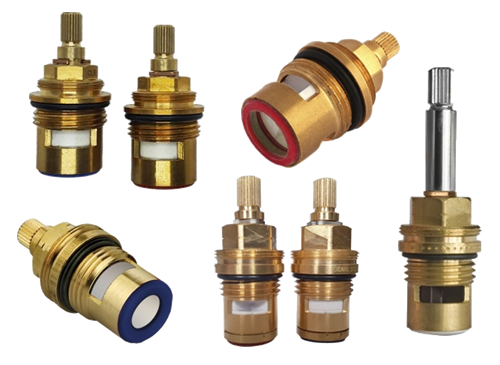
- Tap tails (usually 1/2″ BSP)
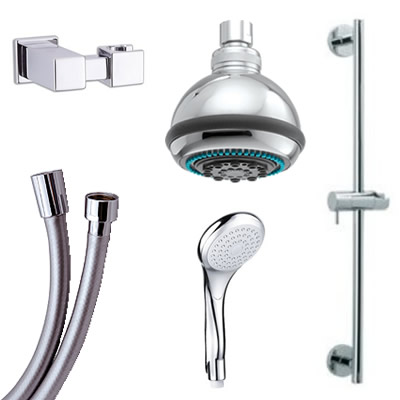
- Shower hose connectors (1/2″ BSP)
- Isolation valve outlets (15mm compression x 1/2″ BSP male)
Female BSP Threads:
- Tap inlets (1/2″ BSP)
- Flexible hoses with compression nuts
- Wall outlet elbows and valve bodies
Customer Tip
Always check both ends of your fitting – one side may be male, the other female (for example, a flexi-tail hose is usually 1/2″ BSP female one end and 15mm compression the other).